Why Every Small Business Must Prioritize Cybersecurity Training
Small businesses often assume that cybercriminals only target large corporations with massive amounts of data and financial assets. Unfortunately, that’s far from the truth. In fact, small businesses are frequently the preferred targets of hackers because they typically lack robust defenses and consistent employee training.
That’s why understanding and implementing cybersecurity best practices for small businesses isn’t optional — it’s essential for business survival. By building a culture of awareness and providing your employees with proper cybersecurity training programs, you protect not only your data but your customers’ trust and your brand’s reputation.
At Gallop Technology Group, we help small business owners strengthen their security posture with practical, cybersecurity services and technology solutions. This guide will walk you through the key steps to develop effective cybersecurity awareness training and protect your business from costly breaches.
Understanding the Core of Cybersecurity Awareness Training
Cybersecurity awareness training is the foundation of any small business defense strategy. It equips your team with the knowledge and skills needed to recognize threats, follow company policies, and make informed decisions that reduce risk.
When employees lack cybersecurity training, even a simple mistake — like clicking on a suspicious email link or using a weak password — can open the door to serious attacks such as ransomware or data breaches.
The purpose of cybersecurity training programs is not just to inform but to transform behavior. It encourages everyone in your organization to act responsibly when handling digital assets, customer data, or internal systems.
Educate Your Team on the Basics
Every cybersecurity program should begin with the fundamentals. Even simple awareness can drastically lower your risk of attack.
Here’s what to include in your first round of training:
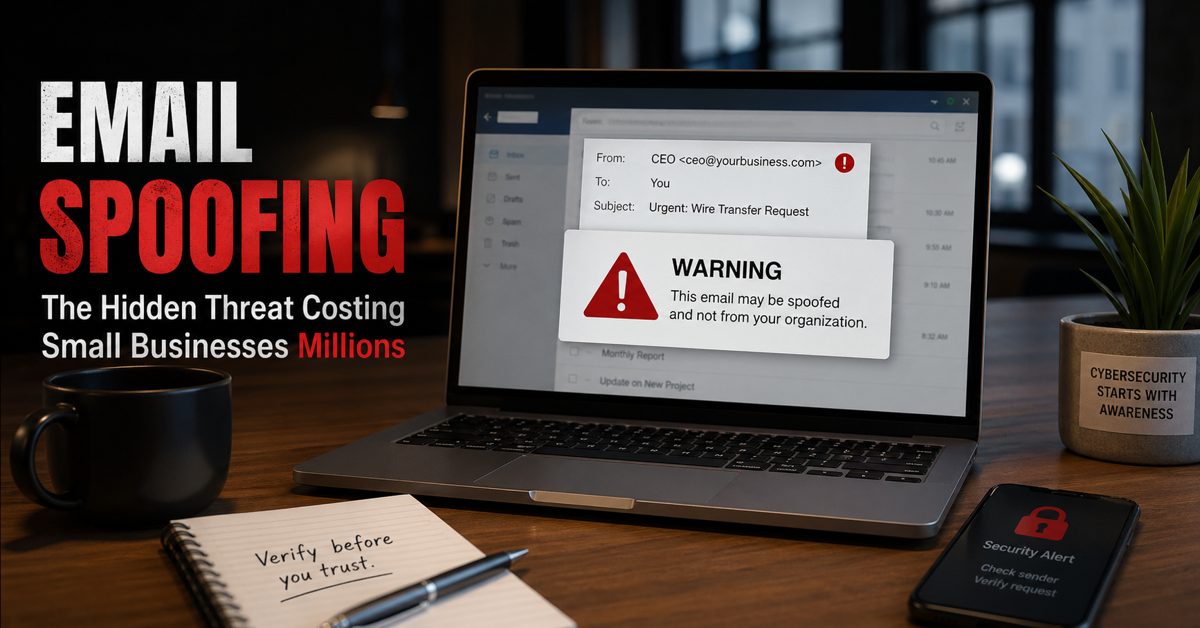
- Phishing Awareness: Teach employees how to identify phishing emails and malicious links. Show real-life examples and point out red flags like strange domains, urgent tones, or unexpected attachments.
- Password Security: Encourage employees to create strong passwords and use password managers. A strong password policy can prevent many common attacks.
- Software Updates: Explain why timely updates and patches are crucial. Many cyberattacks exploit outdated software or unpatched vulnerabilities.
- Safe Wi-Fi Practices: Educate your team about the dangers of connecting to unsecured networks, especially when working remotely.
By reinforcing these cybersecurity best practices, small businesses can reduce common vulnerabilities that hackers love to exploit.
Make Cybersecurity Training Programs Continuous
Cyber threats evolve daily, which means your training should never be a one-time event. The most secure small businesses are those that treat cybersecurity awareness training as an ongoing effort.
You can build a regular training schedule, such as:
- Monthly or Quarterly Workshops: Dedicate each session to a specific cybersecurity topic. For instance, one month could focus on phishing prevention, the next on data protection or encryption.
- Mini Refresher Sessions: These short, focused sessions can be delivered during staff meetings or via short videos. They help reinforce important lessons.
- Guest Expert Talks: Invite cybersecurity experts to present new trends, threats, and defense strategies.
The goal is consistency — to keep security top-of-mind for all employees and ensure no one forgets the importance of vigilance.
Use Real-World Examples to Drive the Lesson Home
Theory alone isn’t enough to create real behavioral change. That’s why the most effective cybersecurity training programs rely on real-world examples.
Consider discussing cases like:
- The Equifax Breach (2017): One of the most infamous data breaches, caused by a failure to update software, exposed over 147 million personal records.
- WannaCry Ransomware (2017): This global attack exploited outdated systems and caused massive financial losses for small and large organizations alike.
When employees see how these incidents occurred — and how easily they could have been avoided through simple best practices — they gain a stronger understanding of why cybersecurity matters.
You can also simulate attacks in a controlled environment, such as mock phishing exercises, to test awareness and reinforce learning through practical experience.
Tailor Cybersecurity Training to Your Industry
Not all small businesses face the same cyber risks. Customizing your training ensures it’s relevant, engaging, and impactful.
- Law Firms: Train your staff on protecting client confidentiality, securing case files, and safely handling sensitive communications.
- Healthcare Practices: Focus on HIPAA compliance, patient data protection, and secure access controls.
- Retail and E-Commerce: Emphasize secure online payment systems and protection from credit card fraud.
- Construction and Real Estate: Address risks related to shared networks, vendor communication, and document storage in the cloud.
By aligning cybersecurity best practices with your specific industry, small businesses make training more relatable and practical for their teams.
Provide Easy Access to Learning Resources
Training doesn’t have to stop at formal sessions. Small businesses should maintain a resource hub or internal portal where employees can revisit key cybersecurity guidelines at any time.
Here’s what to include:
- Cybersecurity Policy Manuals: Clearly define acceptable use of company devices, data handling procedures, and reporting protocols.
- How-to Guides: Simple guides on setting up two-factor authentication (2FA), recognizing phishing attempts, or safely using public Wi-Fi.
- Video Tutorials: Short videos explaining real scenarios can make learning interactive and easy to digest.
Providing self-service resources allows your employees to take ownership of their cybersecurity learning journey — one of the best long-term defenses your business can have.
Create a Feedback Loop for Continuous Improvement
Effective training programs adapt based on feedback. After each training session, gather input from your team about what was helpful and what needs more clarity.
You can do this through:
- Anonymous Surveys: Ask employees to rate each session’s relevance and suggest improvements.
- Follow-up Quizzes: Use brief quizzes to measure retention and identify knowledge gaps.
- Performance Tracking: Monitor whether employees are applying what they learned — for example, if phishing reports increase or password policies improve.
Continuous improvement ensures your cybersecurity awareness training stays relevant and effective, even as new threats emerge.
Foster a Cybersecurity Culture from the Top Down
Training works best when leadership sets the tone. As a small business owner, your attitude toward cybersecurity will shape how seriously your employees take it.
Lead by example:
- Follow all company security protocols.
- Communicate transparently about any incidents or near-misses so the team can learn from them.
- Recognize and reward employees who demonstrate good cybersecurity habits.
Building a culture of cybersecurity creates shared responsibility across your organization. When everyone — from management to interns — understands their role, your business becomes much harder to attack.
Integrate Cybersecurity Training into Onboarding
For small businesses that are growing or frequently hiring, onboarding is the perfect time to introduce cybersecurity best practices.
Including cybersecurity training in your onboarding checklist ensures that every new team member learns your company’s expectations from day one.
Key onboarding training elements can include:
- Acceptable use of devices and email.
- Company password and access control policies.
- Guidelines for remote work and personal device use (BYOD).
- How to report suspicious emails or incidents.
When cybersecurity becomes part of your organizational DNA, your employees view it as a standard business responsibility — not an afterthought.

The Role of Managed Service Providers (MSPs)
Not every small business has the in-house expertise to run advanced cybersecurity programs — and that’s perfectly okay. Partnering with a Managed Service Provider (MSP) like Gallop Technology Group can bridge that gap.
An MSP provides ongoing monitoring, training, and support to ensure your defenses stay up to date. At Gallop, our cybersecurity services include:
- Custom cybersecurity awareness training programs for employees.
- Threat detection and risk mitigation.
- Secure data backup and disaster recovery planning.
- Cloud and endpoint protection solutions.
With a trusted technology partner, small business owners can focus on growth while knowing their systems and employees are secure.
Key Takeaways for Small Business Owners
Implementing cybersecurity best practices doesn’t require massive budgets or complex tools. What it requires is consistency, awareness, and accountability across your organization.
To recap:
- Educate your employees on cybersecurity basics.
- Conduct regular, engaging training sessions.
- Tailor your programs to your industry.
- Provide easy access to resources.
- Encourage feedback and continuous improvement.
- Lead by example and build a culture of security.
When your team understands that cybersecurity is part of everyone’s job, your risk of a successful attack drops significantly.
Take the Next Step Toward Cybersecurity Confidence
Cybersecurity is not a one-time task but a long-term commitment to safeguarding your people, data, and operations. By following cybersecurity best practices for small businesses, you can strengthen your defenses, maintain compliance, and build lasting trust with clients and partners. At Gallop Technology Group, we understand the challenges small business owners face when it comes to cybersecurity. That’s why we provide tailored solutions designed to fit your needs—from employee cybersecurity training programs and risk assessments to endpoint protection, network defense, and secure cloud management. Our goal is to empower your team with the tools and knowledge to stay vigilant and resilient against evolving threats.
Don’t wait until a cyber incident exposes vulnerabilities in your business. Partner with Gallop Technology Group today to create a customized cybersecurity plan that keeps your organization safe and your operations running smoothly. Call us at 480-614-4227 to get started.
Sources: