Building Stronger IT Leadership Through a Holistic Cyber Approach
In the modern business environment, IT executives face unprecedented challenges in safeguarding users, data, and infrastructure from evolving threats. A holistic cyber approach empowers leaders such as CIOs, CTOs, and IT Directors to view cybersecurity not just as a technical concern but as a strategic, organization-wide responsibility. This mindset goes beyond deploying security tools—it unites people, processes, and technology into a cohesive defense system that strengthens resilience across every layer of the organization.
At Gallop Technology Group, we help IT leaders build and sustain this holistic cybersecurity approach. Our solutions include risk management, cloud security, compliance alignment, and advanced threat protection, all designed to reinforce the leadership role of IT executives in keeping organizations secure and operational. Partnering with us allows your team to take proactive control of your security posture—ensuring protection, compliance, and continuity for your business.
The Expanding Role of IT Executives in Cybersecurity
In many organizations, cybersecurity used to be considered an IT department task—a purely technical matter handled by engineers behind the scenes. However, cyber threats have evolved rapidly, and this limited view no longer works. IT executives are now expected to lead cybersecurity strategy from the top, aligning it with business goals and risk management objectives.
Chief Information Officers (CIOs) are now at the center of governance, compliance, and data protection initiatives. Their leadership ensures that cybersecurity policies are aligned with regulations such as HIPAA or GDPR and embedded into company operations.
Chief Technical Officers (CTOs), meanwhile, oversee the security architecture itself—ensuring that systems, applications, and infrastructure are built to be resilient and scalable.
And IT Directors execute the cybersecurity strategy day-to-day, implementing security frameworks, maintaining infrastructure, and ensuring incident response readiness.
When these leaders work together under a holistic cybersecurity approach, they not only reduce risk but also strengthen trust—among employees, customers, and business partners alike.
Understanding the Holistic Cyber Framework
A holistic cyber mindset integrates three interconnected pillars: people, processes, and technology. Each plays a vital role in ensuring that cybersecurity is not just reactive, but proactive and adaptive.
People: Empowering Employees as the First Line of Defense
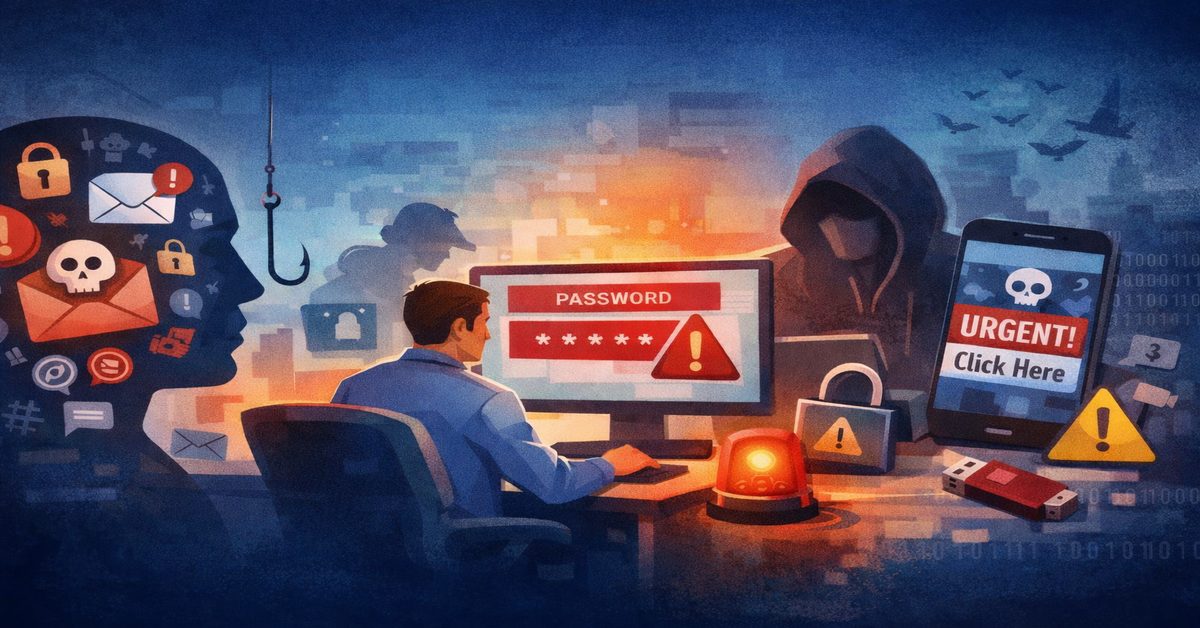
Cybersecurity begins with people. Even the most advanced systems can be compromised by a single mistake, making employee cybersecurity awareness one of the most powerful defenses against threats.
IT executives must invest in continuous training and awareness programs that educate staff on identifying phishing scams, suspicious links, and social engineering attempts. This not only protects company data but also encourages accountability.
Beyond training, leaders must nurture a security-first culture—where employees understand their shared employee role in cybersecurity. When staff members feel empowered and informed, they actively contribute to the organization’s resilience instead of being its weakest link.
Practical strategies include:
- Running quarterly cybersecurity awareness campaigns.
- Conducting phishing simulations to test response.
- Recognizing employees who report suspicious activities.
This approach turns every user into a security asset rather than a vulnerability.
Process: Establishing Strong and Scalable Security Practices
Effective cybersecurity is built on well-defined processes. IT executives must lead the development of clear security policies, incident response procedures, and compliance frameworks that support business continuity.
A holistic cybersecurity approach emphasizes:
- Risk assessments: Regularly identifying potential threats and vulnerabilities before they can cause harm.
- Incident response plans: Outlining exact steps to detect, contain, and recover from a breach.
- Policy governance: Ensuring data protection measures comply with laws and internal standards.
IT leaders must ensure that every department understands its role in these processes. This shared structure enhances collaboration, accountability, and readiness—making cybersecurity part of the organization’s routine operations rather than a reactive task.
When these processes are aligned with business goals, cybersecurity transitions from being a cost center to a strategic advantage.
Technology: Using Innovation to Secure the Enterprise
Technology remains the backbone of any holistic cyber strategy. CIOs, CTOs, and IT Directors must ensure that their infrastructure is equipped with layered security and real-time monitoring tools to stay ahead of evolving threats.
Key technological components include:
- Endpoint protection that detects and blocks malicious software.
- Firewalls and intrusion prevention systems for perimeter defense.
- Encryption tools to secure sensitive information both at rest and in transit.
- Artificial intelligence (AI) and machine learning (ML) for threat detection and predictive analytics.
Furthermore, with more organizations migrating to the cloud, cloud security becomes an executive priority. IT leaders must implement multi-factor authentication (MFA), data encryption, and continuous compliance monitoring to ensure that remote and hybrid operations remain protected.
When technology, processes, and people work in unison, they form an unbreakable shield—ensuring both proactive defense and quick recovery from any incident.
Aligning Cybersecurity with Business Goals
The success of a cybersecurity strategy depends on how well it supports the organization’s overall mission. IT executives are uniquely positioned to bridge the gap between technical initiatives and business outcomes.
A holistic cybersecurity approach ensures that data protection enhances—not hinders—innovation, productivity, and customer trust. For example, secure cloud adoption can streamline workflows, while strong compliance systems can attract clients who value privacy and data protection.
Leaders must also communicate effectively with the C-suite to justify cybersecurity investments. Translating technical risks into business terms helps gain executive buy-in and funding. Instead of talking about “firewalls” or “intrusion detection,” discuss “protecting revenue streams” and “avoiding costly downtime.”
When cybersecurity is understood as a driver of growth rather than an expense, it becomes a core component of corporate strategy.
Creating a Security-First Culture Across the Organization
A sustainable cybersecurity program thrives on a culture of awareness and accountability. IT executives can inspire this by modeling the right behaviors and reinforcing the message that security is everyone’s job.
Here’s how leadership can make this happen:
- Promote transparency: Encourage employees to report issues without fear of blame.
- Integrate security into onboarding: Make cybersecurity training part of every new hire’s journey.
- Reward compliance: Recognize departments that consistently follow best practices.
This cultural shift reinforces employee cybersecurity awareness, transforming it from a once-a-year training session into a daily mindset.
Ultimately, a security-aware culture reduces human error—the most common cause of breaches—and strengthens organizational resilience from within.
Staying Agile in an Evolving Threat Landscape
Cyber threats evolve faster than ever, and so must IT leaders. A holistic cyber strategy is never static—it demands continuous improvement, adaptation, and learning.
Regularly updating security frameworks, conducting vulnerability tests, and reviewing incident reports enable IT executives to stay ahead of emerging risks. By adopting an agile cybersecurity approach, leaders ensure that their defense mechanisms evolve alongside new technologies, regulations, and attack methods.
Moreover, collaborating with trusted partners—such as managed service providers (MSPs) or cybersecurity consultants—helps organizations gain access to specialized expertise and advanced tools that may not exist internally.

Leadership and Communication: The Cornerstones of Cyber Success
Even the best security tools are ineffective without strong leadership. IT executives must excel not just in technical knowledge but in communication, collaboration, and strategic vision.
Leaders who clearly articulate the importance of cybersecurity foster organization-wide cooperation. They also empower non-technical departments—like HR, finance, and marketing—to understand how their roles impact the company’s overall security posture.
This alignment creates a unified defense where every employee, from the executive suite to front-line staff, understands their employee role in cybersecurity and how it contributes to organizational protection.
Lead with a Holistic Cyber Vision
As cyber threats continue to evolve, IT executives play a pivotal role in steering their organizations toward resilience and security. By embracing a holistic cybersecurity approach—balancing people, process, and technology—they can create stronger, safer, and more adaptable businesses.
At Gallop Technology Group, we partner with IT leaders to turn cybersecurity into a strategic advantage. Our team provides end-to-end solutions that include cloud protection, compliance management, network defense, and risk mitigation. Together, we help you master the holistic cyber mindset, ensuring that your organization’s data, systems, and users remain secure. Contact us today at 480-614-4227 to learn how we can empower your IT leadership and protect what matters most.
Source:
- National Institute of Standards and Technology (NIST) Cybersecurity Framework — https://www.nist.gov/cyberframework