How IT Automation Helps SMBs Build Predictable and Scalable Operations
Most small and mid-sized businesses hear the term IT automation and immediately think of complex tools, expensive systems, or something only large enterprises can afford. That assumption is one of the biggest reasons many businesses stay stuck in inefficient, reactive environments. In reality, IT automation is not about adding more technology—it’s about making your existing systems work consistently, predictably, and with less manual effort.
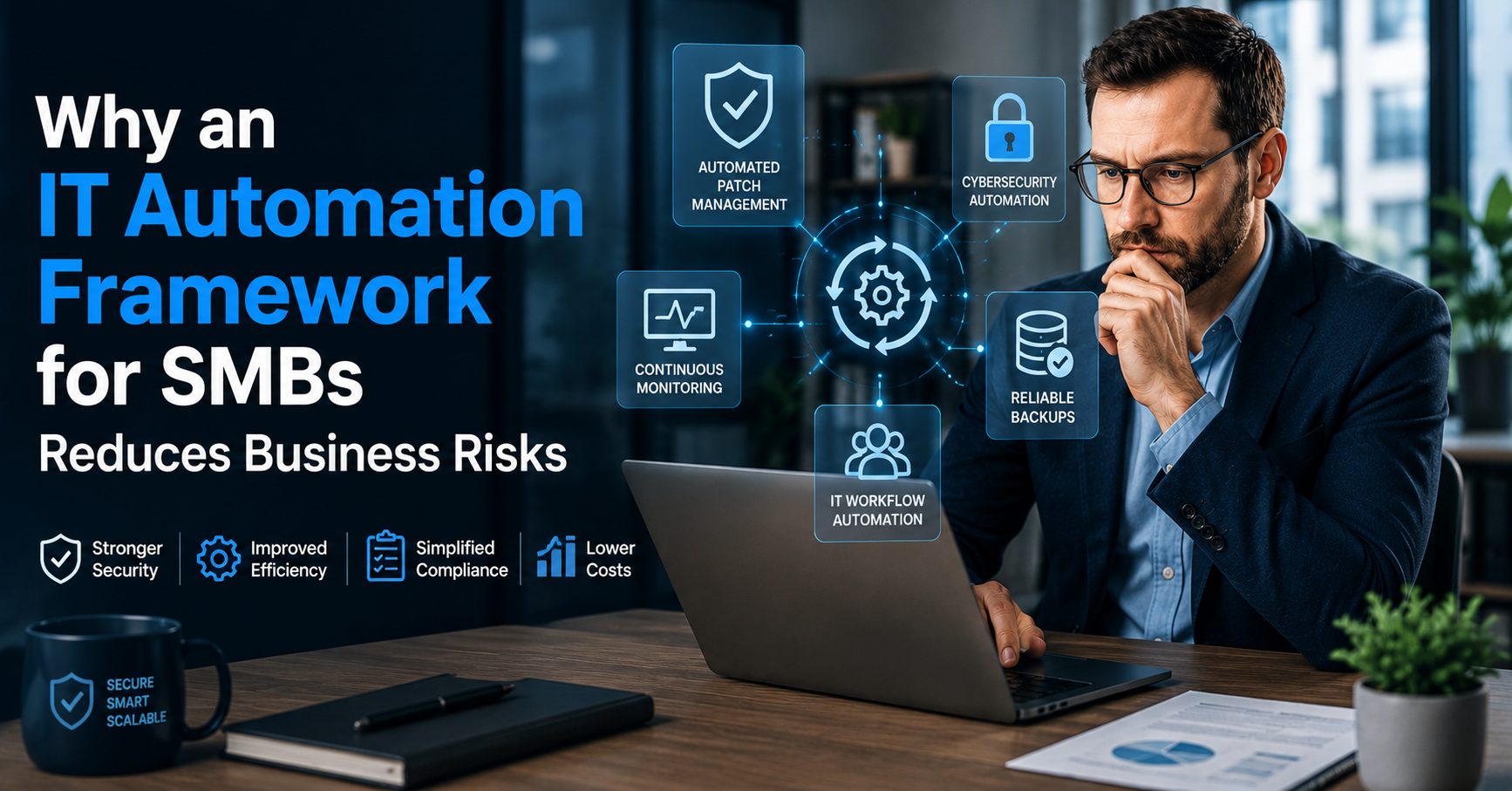
At its core, IT automation is the process of reducing repetitive manual tasks through structured systems, standardized processes, and intelligent workflows. This includes everything from automated updates and monitoring to streamlined IT workflow automation that ensures tasks are completed the same way every time. When done right, it reduces human error, improves response times, and creates a more stable business environment.
If your team is still relying heavily on manual updates, reactive troubleshooting, or inconsistent processes, you are not alone. Many SMBs operate this way for years without realizing the hidden cost it creates—lost productivity, increased risk, and difficulty scaling operations.
At Gallop Technology Group, this is exactly where we step in. We help businesses move away from reactive IT environments by strengthening cybersecurity, improving system reliability, and building structured processes that support long-term growth. Whether it’s managed IT services, cybersecurity protection, or compliance support, our goal is simple: make your technology dependable so your business can grow without disruption.
Understanding the IT Automation Maturity Model
The concept of an IT automation maturity model helps simplify a complex issue. Instead of looking at technology as a collection of tools, this model focuses on how your systems operate as a whole. It answers a critical question:
How dependent is your business on people versus processes?
Most SMBs fall into one of three stages. Each stage reflects how structured, predictable, and scalable your IT environment really is. Understanding where you stand is the first step toward improvement.
Stage 1: Manual and Reactive Environments
In the first stage, businesses rely heavily on people to keep systems running. This is the most common starting point, especially for growing companies that have not yet formalized their IT processes.
In this environment, updates are performed manually—if they are done at all. Monitoring is minimal or nonexistent, meaning issues are often discovered only after something breaks. Support tends to be reactive, with teams constantly responding to problems instead of preventing them.
This stage creates several challenges. First, it is difficult to scale. As the business grows, the workload increases, and so does the risk of mistakes. Second, it introduces inconsistency. Different team members may handle the same issue in different ways, leading to unpredictable outcomes. Third, it increases exposure to security risks, especially when updates and patches are not applied consistently.
Many businesses operate in this stage longer than they should because it feels manageable—until it isn’t. A single system failure, security incident, or employee departure can quickly expose how fragile the setup really is.
Stage 2: Partial Automation but Fragmented Systems
Stage two is where many SMBs believe they are in a good place. Some level of IT process automation exists. There may be tools in place for patching, backups, or monitoring. However, these tools often operate independently, without a unified strategy.
This creates a fragmented environment. While certain tasks are automated, the overall system still lacks consistency. Processes are not standardized, and different tools may not communicate effectively with each other. As a result, the business experiences a false sense of security.
Everything seems fine—until something breaks.
When issues arise in a stage two environment, they tend to be more complex. Because systems are partially automated but not fully aligned, troubleshooting becomes more difficult. There may be gaps in monitoring, inconsistencies in updates, or unclear ownership of processes.
This stage also presents challenges during audits or compliance reviews. Without standardized workflows and documented processes, it becomes difficult to prove that systems are being managed consistently. This can impact everything from cybersecurity posture to insurance eligibility.
Despite these limitations, stage two is an important step forward. It shows that the business recognizes the value of automation. The problem is not the presence of tools—it is the lack of a cohesive IT automation system that ties everything together.
Stage 3: Optimized and Predictable IT Operations
Stage three represents a fully optimized environment where automation is not just present—it is strategic.
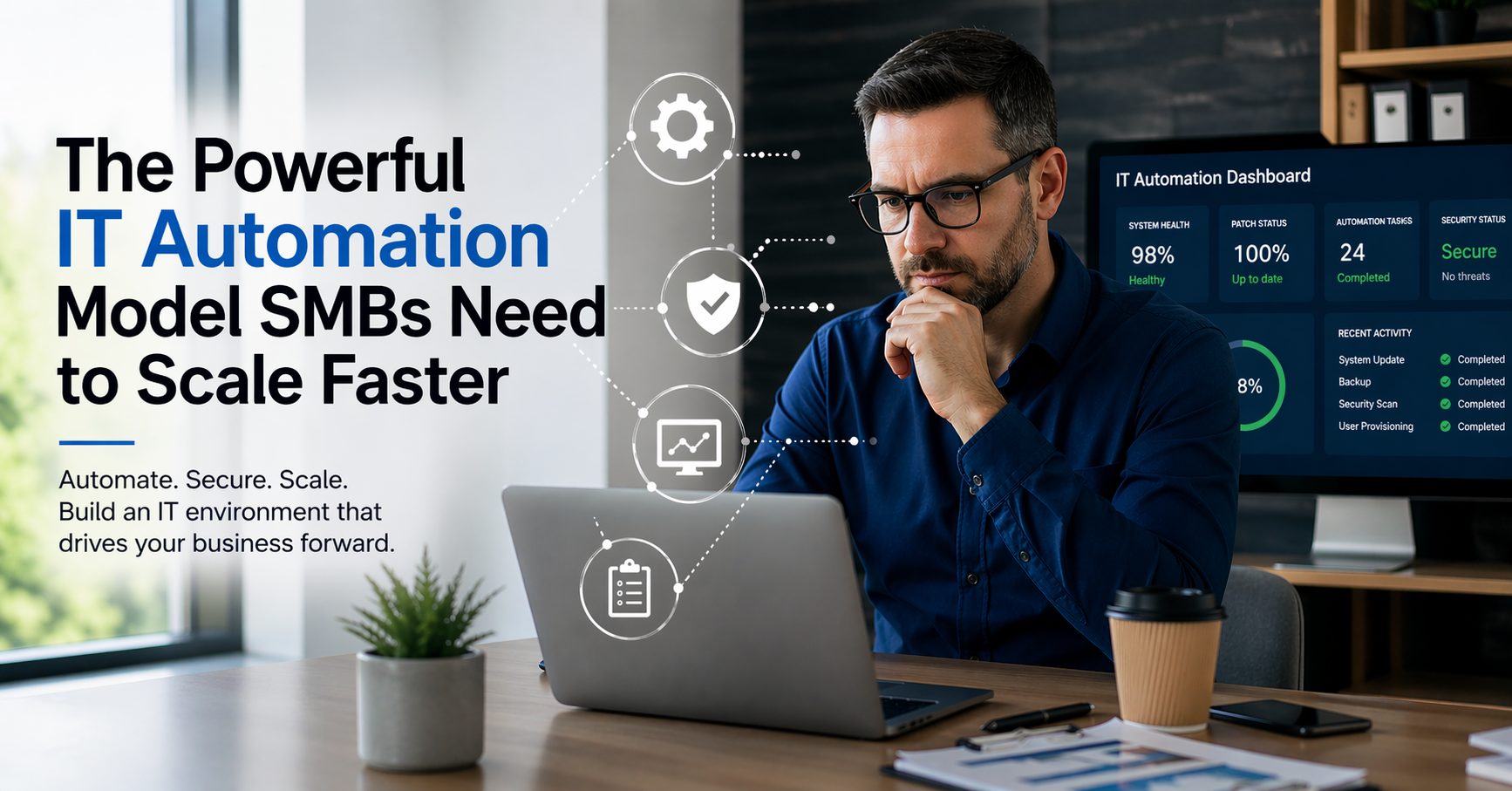
In this stage, monitoring is continuous. Systems are actively watched for potential issues, allowing teams to respond before problems escalate. Updates are consistent and automated, ensuring that all devices remain secure and compliant. Processes are standardized, meaning tasks are performed the same way every time, regardless of who is involved.
This level of maturity creates stability. It reduces downtime, improves security, and allows businesses to operate with confidence. Instead of reacting to problems, teams can focus on growth, innovation, and long-term planning.
What makes stage three different is not the number of tools being used. It is how those tools are integrated into a cohesive system. Every part of the environment works together, supported by clear processes and reliable automation.
For business owners and leadership teams, this translates into something extremely valuable: predictability. You know what to expect from your systems, and you can trust them to support your operations without constant oversight.
Why Most SMBs Get Stuck Before Reaching Stage 3
If stage three offers such clear benefits, why do so many businesses remain in stages one or two?
The answer often comes down to misunderstanding.
Many organizations believe that improving automation means buying more tools. They invest in new software without addressing the underlying processes. This leads to increased complexity without meaningful improvement.
Others struggle with time and resources. Building a structured automation strategy requires planning, expertise, and ongoing management. Without the right support, it can feel overwhelming.
There is also a human factor. Teams become comfortable with existing workflows, even if they are inefficient. Changing processes requires effort, and without a clear vision, it is easy to delay improvements.
The result is a cycle where businesses remain in a reactive or semi-automated state, dealing with recurring issues instead of solving them at the root.
Moving Toward a Predictable IT Environment
Transitioning to a more mature automation stage does not happen overnight. It is a gradual process that focuses on improving consistency rather than adding complexity.
The first step is identifying where your current environment stands. Are updates consistent? Is monitoring proactive or reactive? Are processes standardized, or do they vary depending on who is handling them?
From there, the focus should shift to reducing manual work and improving reliability. This includes implementing structured IT workflow automation, ensuring that repetitive tasks are handled consistently and efficiently.
It also involves aligning your systems under a unified strategy. Instead of using disconnected tools, the goal is to build an integrated IT automation system where every component supports the overall operation.
Over time, these improvements create a more stable and scalable environment. They reduce the burden on your team and allow your business to grow without being held back by technology limitations.
The Real Value of IT Automation for SMBs
For small and mid-sized businesses, the benefits of IT automation go beyond efficiency. It directly impacts cost, security, and scalability.
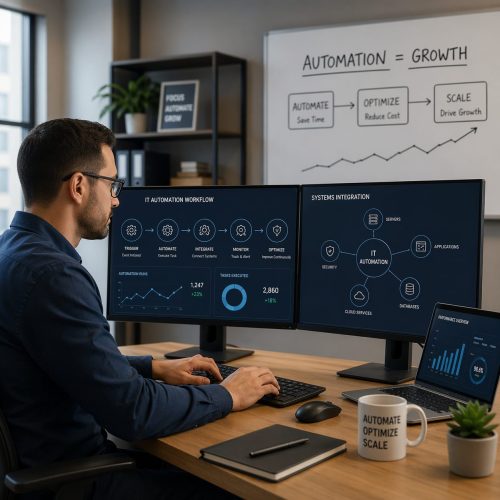
By reducing manual tasks, businesses can lower operational costs and free up resources for more strategic initiatives. By standardizing processes, they can minimize errors and improve overall performance. And by implementing consistent monitoring and updates, they can strengthen their cybersecurity posture.
Perhaps most importantly, IT automation creates confidence. It allows business owners to focus on growth, knowing that their systems are reliable and secure.
This is especially important for companies operating in regulated industries or those seeking cyber insurance. Consistency and documentation are key factors in meeting compliance requirements, and automation plays a critical role in achieving both.
Build a System That Works Without Constant Intervention
IT automation is not about chasing new technology or keeping up with trends. It is about creating a system that works reliably, consistently, and with minimal manual effort.
For SMBs, this means moving away from reactive environments and building a foundation that supports growth. It means reducing dependency on individuals and increasing reliance on structured processes.
If your business is experiencing recurring IT issues, inconsistent performance, or difficulty scaling, these are not just technical problems—they are signs of an immature automation model.
At Gallop Technology Group, we help businesses take control of their IT environments by improving security, stability, and operational consistency. You do not need to overhaul everything at once. The goal is to take the next step toward a more predictable and reliable system.
If you are ready to understand where your business stands and how to improve it, contact our team at (480) 614-4227. Let’s make your IT environment something you can depend on—so you can focus on growing your business.
Sources
- National Institute of Standards and Technology (NIST) – Automation and IT Process Guidance
https://www.nist.gov
- IBM – IT Automation Overview
https://www.ibm.com/topics/automation
- Microsoft – IT Operations and Automation Concepts
https://learn.microsoft.com
- Gartner – IT Maturity Models and Process Optimization Insights
https://www.gartner.com
Frequently Asked Questions:
What is an IT automation maturity model for SMBs?
An IT automation maturity model is a framework that helps small and mid-sized businesses understand how advanced and organized their IT operations are. It typically includes stages ranging from manual, reactive processes to fully automated and predictable systems that support business growth.
Why is IT automation important for small businesses?
IT automation helps small businesses reduce manual work, improve consistency, and minimize costly errors. It also strengthens security by ensuring updates, monitoring, and processes are handled reliably, which is critical for protecting business operations and meeting compliance requirements.
What stage of IT automation are most SMBs in?
Most SMBs fall into either stage one (manual and reactive) or stage two (partially automated but fragmented). While these stages may seem manageable, they often lead to inefficiencies, higher risks, and challenges when scaling or handling security incidents.
How can a business move from reactive IT to proactive IT operations?
Businesses can transition by reducing manual processes, standardizing workflows, and implementing structured IT workflow automation. This includes consistent monitoring, automated updates, and integrating systems into a unified IT automation system that improves reliability and efficiency.
Does IT automation mean buying more tools or software?
No, IT automation is not about adding more tools. It is about improving how existing systems work together. The goal is to reduce manual work, increase consistency, and create a predictable environment—not to add unnecessary complexity.