Protecting Operations, Revenue, and Trust When Disruptions Hit
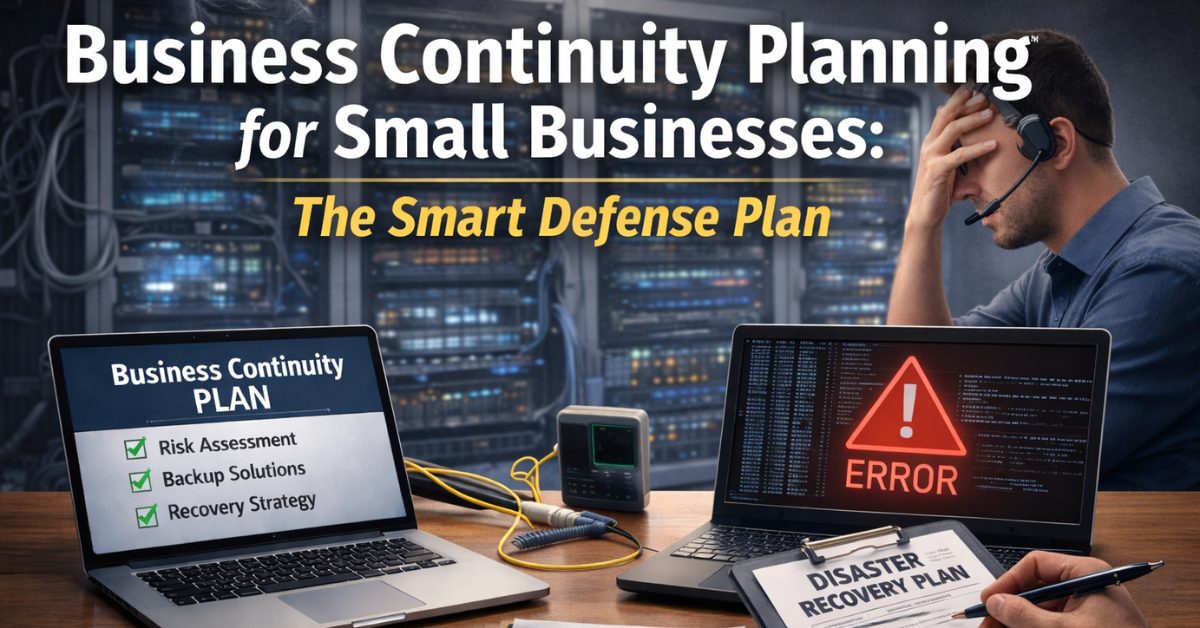
Business continuity planning for small businesses is the foundation that keeps operations running when disruptions occur. System outages, cyber incidents, data loss, and unexpected downtime can stop productivity and revenue with little warning. For small business owners, even short interruptions can create long-term consequences if there is no structured plan to respond and recover.
Effective continuity planning goes beyond checklists. It requires secure systems, protected data, and the ability to restore operations quickly. This is where cybersecurity and Business Continuity and Disaster Recovery (BCDR) play a critical role. Cybersecurity helps prevent threats that cause downtime, while BCDR ensures that systems and data can be restored when prevention alone is not enough. Together, they transform continuity planning from a theoretical exercise into a practical defense strategy.
Gallop Technology Group helps small businesses build resilient operations through managed IT services, cybersecurity protection, and BCDR solutions designed for real-world risks. Our approach focuses on reducing downtime, protecting business data, and ensuring that recovery plans work when they are needed most.
Understanding Business Continuity Planning for Small Businesses
What Business Continuity Really Means
Business continuity focuses on keeping essential operations running during and after a disruption. It is not limited to disaster recovery or IT restoration. Instead, it addresses how people, technology, communication, and processes work together to maintain critical functions.
For small businesses, continuity planning should remain practical and achievable. The goal is not to create an overly complex document but to ensure that the business can respond, recover, and resume operations without unnecessary delays.
A strong continuity plan helps answer key questions:
- How will employees work if systems are unavailable?
- How will customers be informed during downtime?
- What data and systems must be restored first?
- Who is responsible for decision-making during disruptions?
Why Small Businesses Face Higher Risk Without a Plan
Large organizations often have redundancy built into their infrastructure. Small businesses rarely do. This creates a higher dependency on a few systems, key staff members, and limited technology resources.
Without business continuity for small businesses, downtime quickly affects:
- Revenue generation
- Customer confidence
- Vendor relationships
- Compliance and insurance obligations
Small businesses that recover slowly may lose customers permanently, especially when competitors remain operational. Continuity planning minimizes this risk by preparing for disruptions before they occur.
Common Threats That Impact Small Business Continuity
Technology Failures and System Downtime
Hardware failures, software crashes, and aging infrastructure remain a leading cause of business interruption. Even a single server or workstation failure can disrupt daily operations when systems are not properly backed up or monitored.
Without proactive IT management, issues often escalate unnoticed until downtime occurs. Business continuity planning ensures that critical systems are protected and recoverable.
Cybersecurity Incidents
Cyberattacks no longer target only large enterprises. Small businesses are often viewed as easier targets due to weaker security controls. Ransomware, phishing, and data breaches can shut down operations instantly.
A continuity plan integrates cybersecurity defenses with recovery processes. This includes secure backups, incident response procedures, and clear communication plans.
Staffing and Operational Disruptions
Unexpected employee absences, health issues, or turnover can disrupt operations when knowledge and responsibilities are concentrated among a few individuals.
Business continuity planning for small businesses includes documenting key processes and cross-training staff to prevent operational gaps.
The Role of a Small Business Recovery Plan
What a Small Business Recovery Plan Includes
A small business recovery plan outlines how systems, data, and operations are restored after a disruption. While continuity planning focuses on staying operational, recovery planning ensures a structured return to normal operations.
Key elements include:
- Data backup and restoration priorities
- Recovery time objectives for critical systems
- Vendor and service provider contacts
- Step-by-step recovery procedures
When aligned properly, business continuity for small businesses and a small business recovery plan work together as a unified defense strategy.
Why Recovery Planning Cannot Be an Afterthought
Many businesses focus only on prevention and overlook recovery. However, no system is immune to failure. Recovery planning ensures that when issues occur, the response is controlled and efficient rather than chaotic.
Businesses that test and update recovery plans experience shorter downtime and fewer financial losses.
Building a Practical Business Continuity Plan
Identifying Critical Business Functions
Not all operations carry the same level of urgency. The first step in continuity planning is identifying which functions must remain operational to support revenue and customer commitments.
Examples include:
- Customer communication
- Payment processing
- Data access
- Core applications
This prioritization helps guide technology investments and recovery strategies.
Assessing Risk and Impact
Risk assessment identifies potential threats and evaluates how they affect operations. This does not require complex modeling. Small businesses benefit most from straightforward evaluations based on realistic scenarios.
Understanding impact allows business owners to allocate resources where they matter most.
Documenting Roles and Responsibilities
During disruptions, confusion slows recovery. Assigning clear roles ensures accountability and faster decision-making.
Documentation should identify:
- Who initiates response actions
- Who communicates with clients
- Who coordinates with IT and vendors
This clarity prevents delays when time matters most.
Technology’s Role in Business Continuity
Secure Backup and Data Protection
Reliable backups form the foundation of continuity and recovery. Backups should be automated, monitored, and tested regularly to ensure data can be restored when needed.
Gallop Technology Group implements secure backup solutions designed to protect small businesses from data loss while supporting rapid recovery.
Managed IT Services and Monitoring
Proactive monitoring identifies potential issues before they escalate into downtime. Managed IT services reduce risk by keeping systems updated, patched, and optimized.
For small businesses, outsourcing IT management provides enterprise-level protection without the overhead of internal staff.
Cloud and Remote Work Enablement
Cloud-based tools support continuity by enabling employees to work from alternate locations when physical offices are unavailable. Secure remote access ensures productivity continues during disruptions.
Continuity planning evaluates which applications should be cloud-based and how access is secured.
Testing and Maintaining the Continuity Plan
Why Testing Matters
A plan that exists only on paper offers limited value. Testing reveals gaps, outdated information, and unrealistic assumptions.
Small businesses should test continuity plans annually or after major system changes.
Keeping the Plan Updated
As businesses grow, continuity plans must evolve. New employees, technologies, and vendors require updates to maintain accuracy.
Regular reviews ensure that business continuity planning for small businesses remains aligned with real-world operations.

Compliance, Insurance, and Client Expectations
Meeting Insurance and Contract Requirements
Many cyber insurance policies require documented continuity and recovery planning. Failure to meet these requirements may affect coverage during incidents.
Clients increasingly expect businesses to demonstrate preparedness, especially when sensitive data is involved.
Building Trust Through Preparedness
A strong continuity plan signals professionalism and reliability. Clients and partners value businesses that can operate consistently despite challenges.
Preparedness strengthens long-term relationships and protects brand reputation.
Why Small Businesses Partner with Gallop Technology Group
Gallop Technology Group specializes in helping small businesses build resilient, secure IT environments that support continuity and recovery. Our services include managed IT support, cybersecurity protection, secure backups, and strategic planning tailored to real operational needs.
We work with business owners to simplify continuity planning while strengthening defenses against downtime and data loss. Our approach focuses on practical solutions that support daily operations and long-term growth.
Business continuity planning for small businesses is not just about preparing for rare events—it is about protecting daily operations from interruptions that can impact revenue, reputation, and customer trust. Cyber threats, system failures, and data loss remain some of the most common causes of business disruption, making cybersecurity and BCDR essential components of any continuity strategy.
A well-designed continuity plan supported by secure backups, proactive monitoring, and tested recovery procedures allows small businesses to respond with confidence and recover without unnecessary delays. When cybersecurity reduces risk and BCDR shortens recovery time, continuity planning becomes a smart defense that supports long-term stability and growth.
Gallop Technology Group works with small businesses to align business continuity planning with cybersecurity and BCDR solutions that fit their operations and goals. If you want to strengthen your defenses, protect your data, and reduce downtime, call our team at 480-614-4227 to learn more about our managed IT, cybersecurity, and BCDR services. Start building a stronger, more resilient business.
Sources
- National Institute of Standards and Technology (NIST) – Business Continuity Planning
https://www.nist.gov - U.S. Small Business Administration – Prepare for Emergencies
https://www.sba.gov - CISA – Cybersecurity and Infrastructure Security Agency: Business Continuity Resources
https://www.cisa.gov
Frequently Asked Questions:
Why is business continuity important for small businesses?
Small businesses have limited resources, so downtime can quickly impact revenue and customer trust. Business continuity helps reduce operational and financial risk.
What should a small business recovery plan include?
A small business recovery plan should include backup strategies, recovery priorities, system restoration steps, and clear roles during recovery.
What risks does business continuity planning address for small businesses?
It addresses risks such as cyberattacks, system failures, data loss, staffing disruptions, and extended downtime.
Can business continuity planning help with cyber insurance requirements?
Yes. Many cyber insurance policies require documented business continuity and small business recovery plans to qualify for coverage.
What is the role of BCDR in business continuity planning for small businesses?
BCDR ensures systems and data can be restored quickly after disruptions, supporting continuity when prevention measures are not enough.