Before you read this- You may already have the option to send an encrypted message from Outlook if you are using MS365. Here is how…
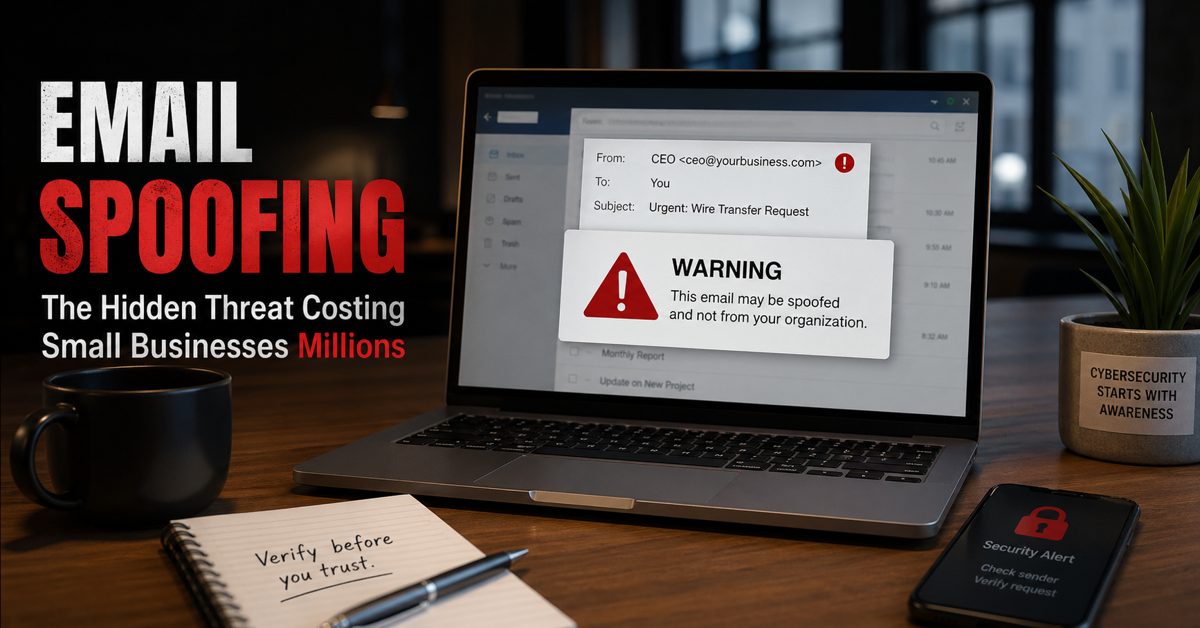
Email is one of the easiest ways to expose sensitive data if the wrong message is sent without the right protection.
Many businesses still treat email like a casual communication tool, when in reality it often carries private information that should never be sent in plain text.
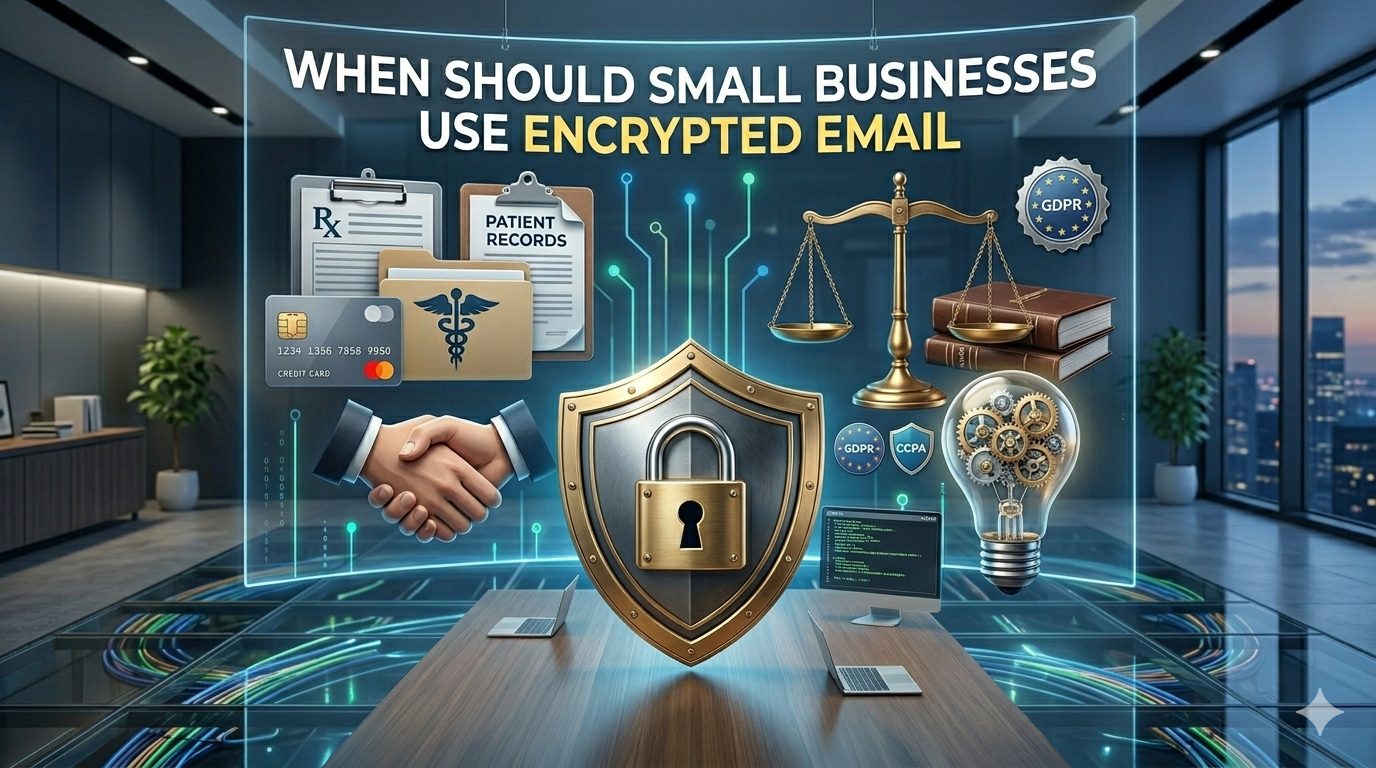
The truth is simple: this is not just a concern for law firms, medical offices, or banks. Any business that handles sensitive personal, financial, employee, or client information should use encrypted email or a secure sharing method when sending that data.
Why it matters
A normal email can be forwarded, misaddressed, intercepted, or accessed from a compromised mailbox. If that email contains sensitive information, the damage can be immediate. It can create risk for your client, your employee, and your business.
Using encrypted email helps reduce that risk and shows clients that your business takes data protection seriously.
Types of information that should be encrypted
Businesses should use encrypted email when sending:
- Social Security numbers
- Driver’s license or passport numbers
- Dates of birth
- Personal home address
- Bank account or credit card information
- Tax documents
- Payroll details
- Medical or insurance information
- Employee records
- Customer account details
- Login credentials or account recovery information
- Contracts or files containing sensitive personal data
- Any confidential client or business information that would cause harm if exposed
What is usually okay to send through normal email
In many cases, standard email is fine for low-risk communication such as:
- Scheduling
- General follow-ups
- Basic project updates
- Non-sensitive administrative messages
- Publicly available information
That said, businesses should still use judgment. Even a simple email can become sensitive if it includes too much detail or is sent to the wrong person.
A simple rule to follow
If the email contains information that could identify someone, expose confidential business matters, or create risk if seen by the wrong person, it should be encrypted.
/Beits Livneh, Gallop Technology Group owner
That is the easiest and safest standard for most businesses to follow.
Don’t rely on “we’ve always done it this way”
One of the biggest mistakes businesses make is assuming that normal email is “good enough” because nothing bad has happened yet. That is not a security policy. It is a gamble.
Cybersecurity problems often come from small, routine habits that were never questioned. Sending sensitive data through normal email is one of them.
How your IT provider can help
A good MSP or cybersecurity partner can help your business put simple safeguards in place, including:
- Secure email encryption tools – Including setting up AUTOMATIC encryption of Emails containing sensitive information.
- Policies for handling sensitive information
- Staff training on what should and should not be emailed
- Safer alternatives for file sharing and client communication
Need help securing business email?
If your company is not sure when to use encrypted email, or whether your current setup is actually protecting sensitive information, now is a good time to review it. The right tools and policies can dramatically reduce risk without making communication difficult.
Gallop Technology Group helps businesses improve email security, protect sensitive data, and put practical cybersecurity measures in place.