Why Small Businesses Struggle to Meet Cyber Insurance Requirements
Many small businesses believe that once they purchase a cyber insurance policy, they are fully protected. That assumption is exactly why so many companies fall into common cyber insurance compliance gaps without realizing it. Having a policy does not automatically mean a business will receive coverage after an incident. Insurance carriers often review whether the company actually met the required security controls and whether there is proof of compliance before approving a claim.
This is where many business owners get caught off guard. They assume their IT provider handled everything, or they believe certain protections were already enabled. Unfortunately, assumptions do not help during a claim investigation. Insurance companies focus on documented evidence, active security controls, and whether the business followed the standards listed in the policy agreement.
At Gallop Technology Group, we help businesses identify security weaknesses before they become expensive insurance problems. Our services include cybersecurity assessments, managed IT support, security monitoring, compliance guidance, etc. designed to help organizations strengthen their defenses and reduce claim risks. Small gaps that seem harmless during normal operations can become major financial liabilities after an incident occurs.
The Difference Between Being Insured and Being Covered
A major misunderstanding in the business community is the belief that paying for a cyber insurance policy guarantees financial protection. In reality, there is a significant difference between being insured and being covered.
Being insured simply means the business purchased a policy. Being covered means the business fulfilled the security obligations outlined in that policy and can provide proof of compliance if a claim is filed.
This difference matters more than many owners realize. Insurance carriers regularly investigate whether required protections were fully implemented before they approve reimbursement. If the organization cannot demonstrate that proper controls were active, the claim may be reduced or denied entirely.
Many businesses do not discover these issues until renewal periods, underwriting reviews, or after a cyberattack. Unfortunately, the worst time to learn about compliance gaps is after financial damage has already occurred.
Why Assumptions Create Risk
One of the most common problems is relying on assumptions instead of verification. Business owners often say things like:
“We thought multi-factor authentication was turned on.”
“We assumed our IT company handled that.”
“We believed our employees were trained.”
Those statements do not help during a claim review.
Insurance companies want evidence. They want logs, policies, reports, training records, and documentation showing that the business followed the required safeguards. If the controls were incomplete, inconsistent, or undocumented, the carrier may argue that the company failed to meet its cyber insurance requirements.
That is why documentation matters just as much as technology itself.
The Hidden Cost of Incomplete Security Controls
Many small businesses invest in software, antivirus tools, or cloud services and assume they are adequately protected. However, security tools alone do not guarantee compliance.
A company may have cybersecurity products installed while still failing important policy requirements because the tools were improperly configured, inconsistently applied, or never monitored correctly.
This creates a dangerous false sense of security.
For example, a company may purchase endpoint protection software but fail to activate alerts. Another organization may use cloud applications but not enforce multi-factor authentication across every employee account. In some situations, backup systems exist but were never tested properly.
From the owner’s perspective, the business “has security.” From the insurer’s perspective, the business failed to meet required standards.
That gap is where claim denials often begin.
The Most Common Cyber Insurance Compliance Gaps
Weak or Incomplete Multi-Factor Authentication
Multi-factor authentication, commonly called MFA, is now one of the most important cyber insurance requirements for many policies. Insurance providers frequently ask whether MFA is enabled for email accounts, remote access systems, cloud applications, and administrator accounts.
The problem is that many businesses only partially implement MFA.
Some companies protect administrator accounts but ignore regular employee accounts. Others activate MFA for Microsoft 365 but fail to secure third-party applications connected to the environment.
During a claim investigation, partial enforcement may not satisfy the insurer’s requirements.
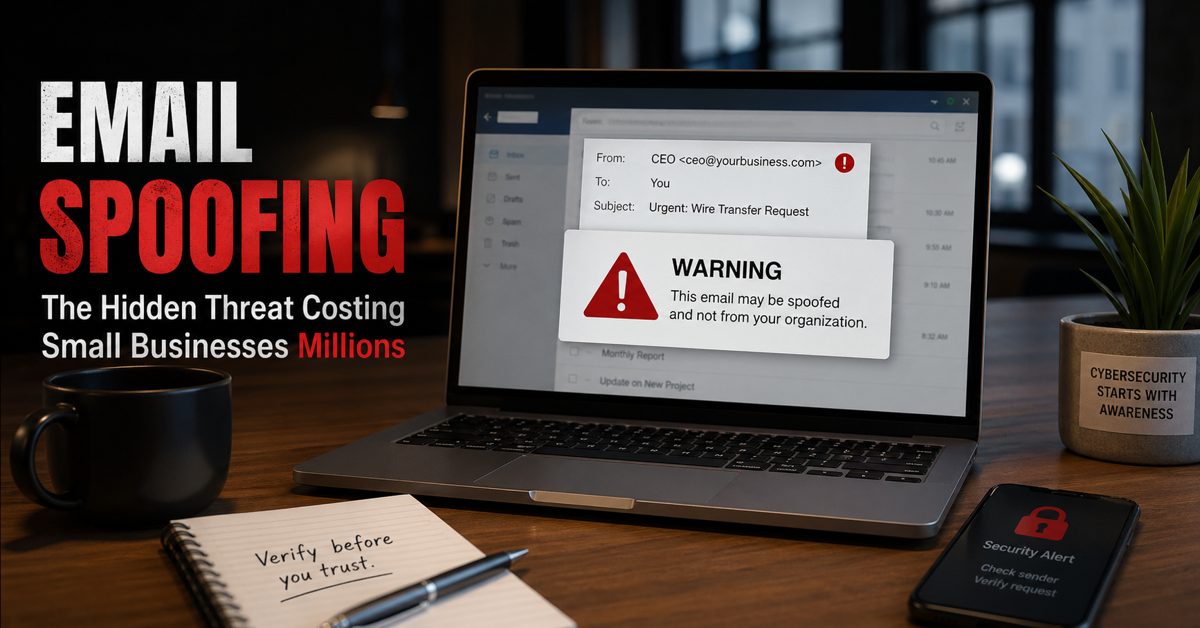
This becomes especially serious in business email compromise incidents. Attackers commonly target employee email accounts to redirect payments, steal sensitive information, or impersonate executives. If MFA was missing or inconsistently enforced, the insurance carrier may question whether the business followed the agreed security standards.
A single missing control can completely change the outcome of a claim.
Missing Written Security Policies
Another common issue involves missing or outdated security policies.
Many organizations operate without documented procedures explaining how employees should respond to cybersecurity incidents. Some businesses have informal expectations but no written standards. Others created policies years ago but never updated them.
Insurance carriers increasingly expect businesses to maintain documented policies related to:
- Password management
- Device usage
- Remote access
- Incident reporting
- Data handling
- Employee responsibilities
- Mobile device security
The policies themselves are important, but documentation alone is not enough. Insurers may also ask whether employees reviewed the policies, signed acknowledgments, or received training related to them.
A company may believe its staff understands security expectations, but without evidence, there may be no proof of compliance.
Poor Employee Security Awareness
Human error continues to play a major role in cyber incidents. Employees may accidentally click malicious links, approve fraudulent wire transfers, or expose credentials through phishing attacks.
Cyber insurance providers understand this risk very well.
As a result, many policies now expect businesses to provide employee security awareness training. Some carriers also expect phishing simulations or recurring training sessions throughout the year.
Businesses that skip employee training create additional exposure during claims investigations. If an attack occurred because employees were unprepared, insurers may review whether the company took reasonable preventive steps beforehand.
Even basic training records can become valuable during a claim review.
Inadequate Logging and Monitoring
Many organizations do not realize how important system logs become after a cyberattack.
Logs help investigators determine what happened, when it happened, how attackers gained access, and which systems were affected. Without logs, proving compliance or reconstructing the incident becomes much more difficult.
Unfortunately, many businesses either fail to retain logs long enough or never configure proper monitoring in the first place.
Some companies overwrite logs within days. Others never review alerts or lack centralized visibility into suspicious activity. This weakens incident response efforts and may create problems during insurance investigations.
If the business cannot demonstrate that security events were monitored properly, the insurer may argue that the organization failed to maintain adequate safeguards.
Weak Access Controls
Access control issues are another major source of compliance problems.
Many businesses allow employees to retain unnecessary permissions long after job responsibilities change. Shared accounts, weak passwords, and excessive administrator privileges also remain common.
Cyber insurance carriers increasingly examine whether businesses followed basic access management practices, including:
- Limiting administrator access
- Removing inactive accounts
- Enforcing password standards
- Restricting sensitive data access
- Monitoring privileged accounts
Poor access controls increase the likelihood of internal misuse and external compromise. More importantly, they often indicate broader weaknesses in the company’s cybersecurity management.
Untested Backup and Recovery Systems
Backups are often discussed during cyber insurance applications, but many businesses never properly test them.
This creates a dangerous situation.
A company may believe backups are functioning correctly until ransomware or system failure occurs. Only then do they discover corrupted files, incomplete backups, or failed recovery procedures.
Insurance providers expect businesses to maintain reliable backup strategies because backups directly impact recovery costs after an incident.
Businesses that fail to verify backup integrity may face operational disruptions, longer downtime, and additional claim scrutiny.
Misrepresentations During Insurance Applications
Some businesses unintentionally create compliance problems before the policy even begins.
During insurance applications, companies may overstate their security posture to qualify for coverage or receive better pricing. They may claim to have controls fully implemented when the protections are only partially active.
This becomes dangerous later.
If a breach occurs and investigators discover inaccurate statements on the application, the insurer may argue that the policy was issued based on incorrect information.
Even minor inaccuracies can become serious during a large financial claim.
This is why businesses should carefully review their actual environment before answering cybersecurity questionnaires.
Real-World Financial Consequences
The financial impact of these compliance gaps can be devastating for small businesses.
Imagine a company experiencing a wire fraud incident after an employee email account becomes compromised. The attacker sends fraudulent payment instructions to clients or accounting staff. Funds are transferred to a criminal-controlled account before the fraud is detected.
The business then files an insurance claim expecting assistance.
During the investigation, the insurer discovers that MFA was not fully enforced on the compromised account. Suddenly, the claim becomes disputed.
Instead of receiving immediate financial relief, the business now faces legal reviews, operational disruption, client trust concerns, and potentially unrecoverable financial losses.
This situation happens more often than many organizations realize.
Cyber incidents are already stressful. Discovering coverage limitations afterward creates an entirely different level of damage.
Why Small Businesses Are Especially Vulnerable
Small businesses are often more vulnerable to cyber insurance compliance gaps because they typically operate with limited internal resources.
Many owners rely heavily on outsourced IT providers or small internal teams. Others focus primarily on daily operations and assume cybersecurity is being handled behind the scenes.
Unfortunately, cybersecurity compliance requires ongoing oversight, verification, and documentation.
Technology alone is not enough.
Businesses must regularly review whether controls remain active, employees are trained, policies are updated, and systems are properly monitored. Without consistent attention, small gaps gradually grow into major weaknesses.
This is why many organizations benefit from an independent cyber insurance audit before an incident occurs.

The Value of a Cyber Insurance Audit
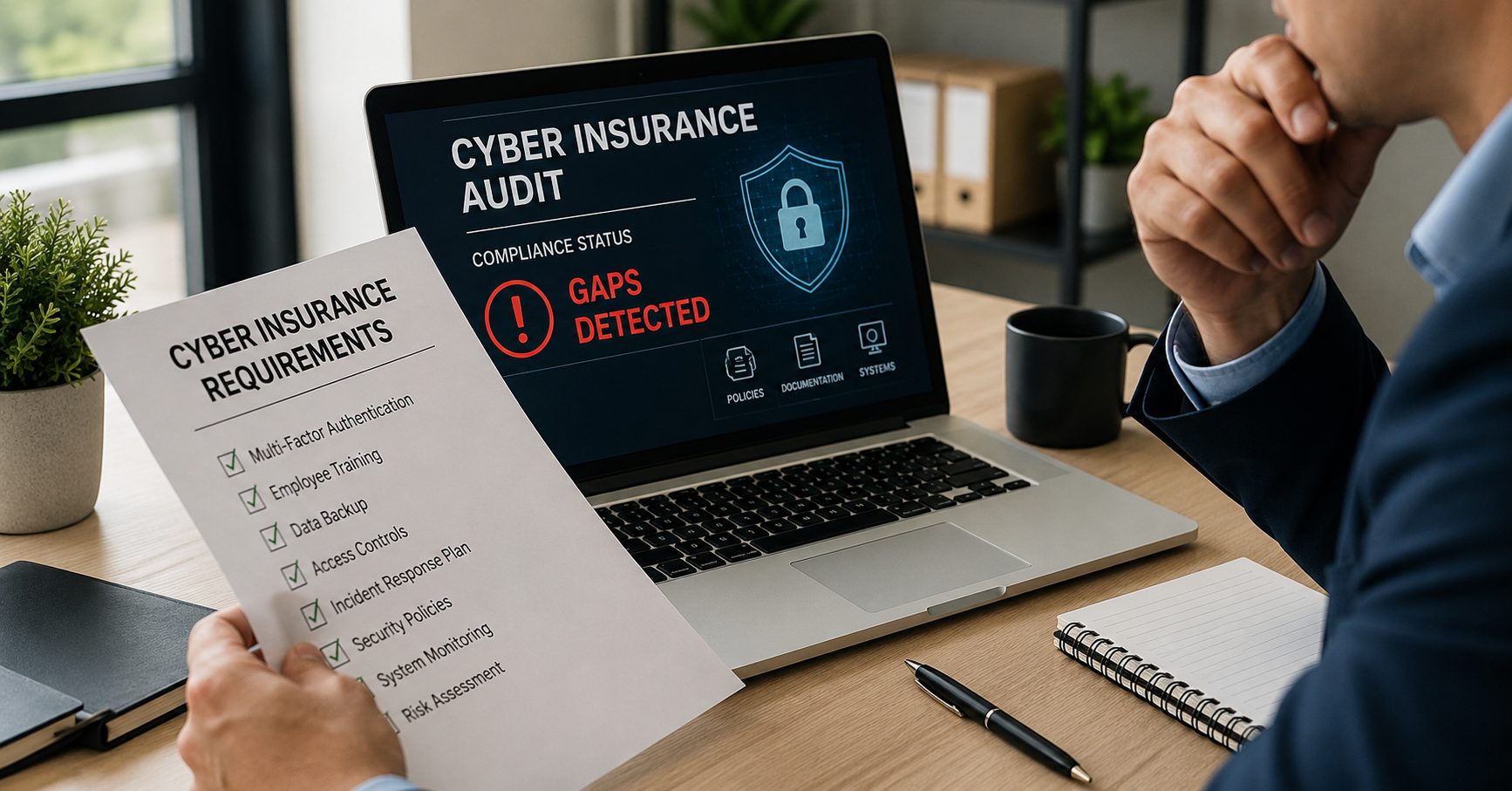
A cyber insurance audit helps businesses compare their actual environment against insurer expectations.
This process identifies weaknesses before they become claim problems. It also helps organizations understand whether their documented controls align with what is truly happening inside the business.
A proper review may include:
- MFA verification
- Policy and procedure assessments
- Backup validation
- Access control reviews
- Security monitoring evaluations
- Employee training documentation
- Incident response readiness
- Compliance documentation analysis
The goal is not simply checking boxes. The goal is reducing the gap between assumed security and provable security.
This distinction matters tremendously during underwriting reviews and claims investigations.
Building Stronger Proof of Compliance
Proof of compliance is one of the most overlooked aspects of cybersecurity readiness.
Many businesses focus heavily on purchasing tools but spend little time documenting how those tools are managed. Insurance carriers, however, often want evidence that controls were consistently maintained over time.
Useful documentation may include:
- Employee training records
- MFA enforcement reports
- Security policy acknowledgments
- Backup testing reports
- Incident response procedures
- Monitoring logs
- Access review documentation
- Vendor security assessments
Without documentation, businesses may struggle to demonstrate that security standards were followed.
Strong proof of compliance strengthens both cybersecurity posture and insurance preparedness.
Cybersecurity Is Now a Business Risk Issue
Cybersecurity is no longer just a technical concern handled quietly in the background. It directly affects financial stability, operational continuity, legal exposure, and insurance eligibility.
Business owners who treat cybersecurity as a simple IT problem often underestimate how closely insurance carriers evaluate operational practices.
Modern cyber insurance requirements continue to evolve because cyberattacks continue to increase in sophistication and financial impact. Insurers now expect businesses to actively manage risk instead of relying solely on software purchases.
Organizations that fail to adapt may find themselves paying for policies that provide far less protection than expected.
Closing the Gap Between Insurance and Real Protection
The most dangerous cyber insurance compliance gaps are often the ones businesses assume are already handled. Missing MFA enforcement, weak documentation, outdated policies, poor employee training, and incomplete monitoring can all create serious claim problems after an incident occurs.
Many companies discover these weaknesses too late.
The difference between having a policy and actually receiving coverage often comes down to preparation, verification, and proof of compliance. Small details that seem minor before an incident can become extremely expensive afterward.
At Gallop Technology Group, we help businesses identify security gaps before they turn into denied claims or operational disasters. Our team provides managed IT services, cybersecurity support, compliance guidance, and security assessments designed to help organizations strengthen their protection and improve readiness.
If you want to better understand your current cybersecurity posture and whether your environment aligns with insurer expectations, contact us today at 480-614 4227 and get your free IT assessment.
Sources
Frequently Asked Questions
What are the most common cyber insurance compliance gaps?
The most common cyber insurance compliance gaps include missing multi-factor authentication (MFA), weak access controls, outdated security policies, poor employee cybersecurity training, inadequate monitoring, and missing proof of compliance documentation.
Why do cyber insurance claims get denied?
Cyber insurance claims are often denied because businesses fail to meet required security controls outlined in their policy. Missing MFA, lack of documentation, or inaccurate information during the application process can all lead to claim disputes or denials.
What is proof of compliance in cyber insurance?
Proof of compliance refers to documented evidence showing that a business implemented and maintained required cybersecurity controls. This may include security policies, employee training records, MFA reports, backup testing results, and monitoring logs.
What is a cyber insurance audit?
A cyber insurance audit is a review of a company’s cybersecurity environment to identify gaps between current security practices and insurer expectations. It helps businesses improve compliance readiness and reduce the risk of denied claims.
How can small businesses improve their cyber insurance compliance?
Small businesses can improve compliance by enforcing MFA across all accounts, updating written policies, training employees regularly, testing backups, monitoring systems consistently, and maintaining clear documentation for proof of compliance.